Categorías
Nuevo blog
Aplicaciones del mundo real de los ventiladores de flujo cruzado de CC de bajo ruido
July 10 , 2026Los beneficios de la optimización aerodinámica de las aspas se vuelven mucho más evidentes al examinar aplicaciones industriales reales. Diferentes industrias tienen requisitos de refrigeración únicos, pero todas comparten un objetivo común: maximizar el rendimiento térmico mientras minimizan el ruido operativo.
En los sistemas de refrigeración comercial, ventiladores de flujo cruzado de CCson responsables de distribuir el aire frío de manera uniforme por todo el interior de los compartimentos refrigerados. Un flujo de aire desigual puede crear fluctuaciones de temperatura que afectan la conservación de alimentos y aumentan la carga de trabajo del compresor. Al adoptar aspas optimizadas aerodinámicamente, los fabricantes logran una distribución del flujo de aire más uniforme mientras reducen el ruido generado por los ventiladores dentro de supermercados, tiendas de conveniencia y refrigeradores de bebidas.
Los equipos médicos representan otra aplicación exigente. Dispositivos como monitores de pacientes, instrumentos de diagnóstico, analizadores de laboratorio y sistemas de ventilación médica suelen funcionar continuamente en entornos donde el ruido excesivo puede afectar negativamente tanto a los pacientes como a los profesionales sanitarios. Los ventiladores de flujo cruzado de CC de bajo ruido ayudan a crear áreas de tratamiento más silenciosas sin comprometer la fiabilidad de la refrigeración.
La rápida expansión de los electrodomésticos inteligentes también ha acelerado la demanda de soluciones de refrigeración silenciosas. Se espera que purificadores de aire, aires acondicionados inteligentes, enfriadores de vino, deshumidificadores y sistemas premium de ventilación doméstica funcionen casi en silencio mientras mantienen un flujo de aire constante. Los consumidores asocian cada vez más un menor ruido operativo con una mayor calidad del producto, lo que convierte el diseño aerodinámico de ventiladores en una ventaja competitiva importante.
La automatización industrial presenta un desafío completamente diferente. Los gabinetes eléctricos, sistemas de control PLC, equipos láser y maquinaria de producción suelen funcionar las 24 horas en entornos industriales exigentes. Aquí, el objetivo va más allá de reducir el ruido. Un flujo de aire estable mejora la fiabilidad electrónica, reduce los requisitos de mantenimiento y prolonga la vida útil de los equipos. Un ventilador de flujo cruzado de CC correctamente diseñado contribuye directamente a mejorar la eficiencia de producción al mantener temperaturas operativas estables durante largos ciclos de producción.
Las estaciones de carga de vehículos eléctricos y los gabinetes de almacenamiento de energía también se han convertido en áreas de aplicación importantes. A medida que las densidades de potencia continúan aumentando, los sistemas de refrigeración deben eliminar mayores cantidades de calor sin generar un ruido ambiental excesivo. La tecnología de aspas aerodinámicas permite a los fabricantes cumplir estos exigentes requisitos térmicos mientras cumplen con normativas urbanas de ruido cada vez más estrictas.
Errores comunes al seleccionar un ventilador de flujo cruzado de CC
Seleccionar el ventilador de refrigeración adecuado implica mucho más que comparar dimensiones. Muchos problemas de refrigeración se originan por una selección incorrecta del ventilador en lugar de un rendimiento insuficiente del mismo.
Un error común es centrarse únicamente en las especificaciones de flujo de aire. Aunque el flujo de aire es importante, la presión estática determina si el aire frío realmente puede pasar a través de disipadores de calor, filtros y canales de ventilación estrechos. Ignorar la presión estática suele provocar un rendimiento de refrigeración decepcionante.
Otro error frecuente es seleccionar la mayor velocidad de rotación disponible. Un RPM más alto normalmente aumenta el flujo de aire, pero también incrementa la turbulencia, la vibración, el consumo de energía y las emisiones acústicas. Un diseño de aspas aerodinámico correctamente desarrollado suele ofrecer un mejor rendimiento general que simplemente aumentar la velocidad del ventilador.
A veces los ingenieros pasan por alto la importancia de la dirección del flujo de aire. Instalar un ventilador con la orientación incorrecta puede crear recirculación de aire dentro de la carcasa, evitando que el aire caliente salga del sistema de manera eficiente.
Ignorar la ruta del flujo de aire circundante es otro problema común. Incluso un excelente ventilador de refrigeración no puede compensar entradas de aire bloqueadas, aberturas de ventilación mal diseñadas o distribuciones internas demasiado saturadas.
Finalmente, seleccionar productos de bajo costo sin evaluar la calidad de los rodamientos, el equilibrado del rotor, la precisión de fabricación y las pruebas acústicas suele provocar fallos prematuros y un rendimiento de refrigeración inconsistente.
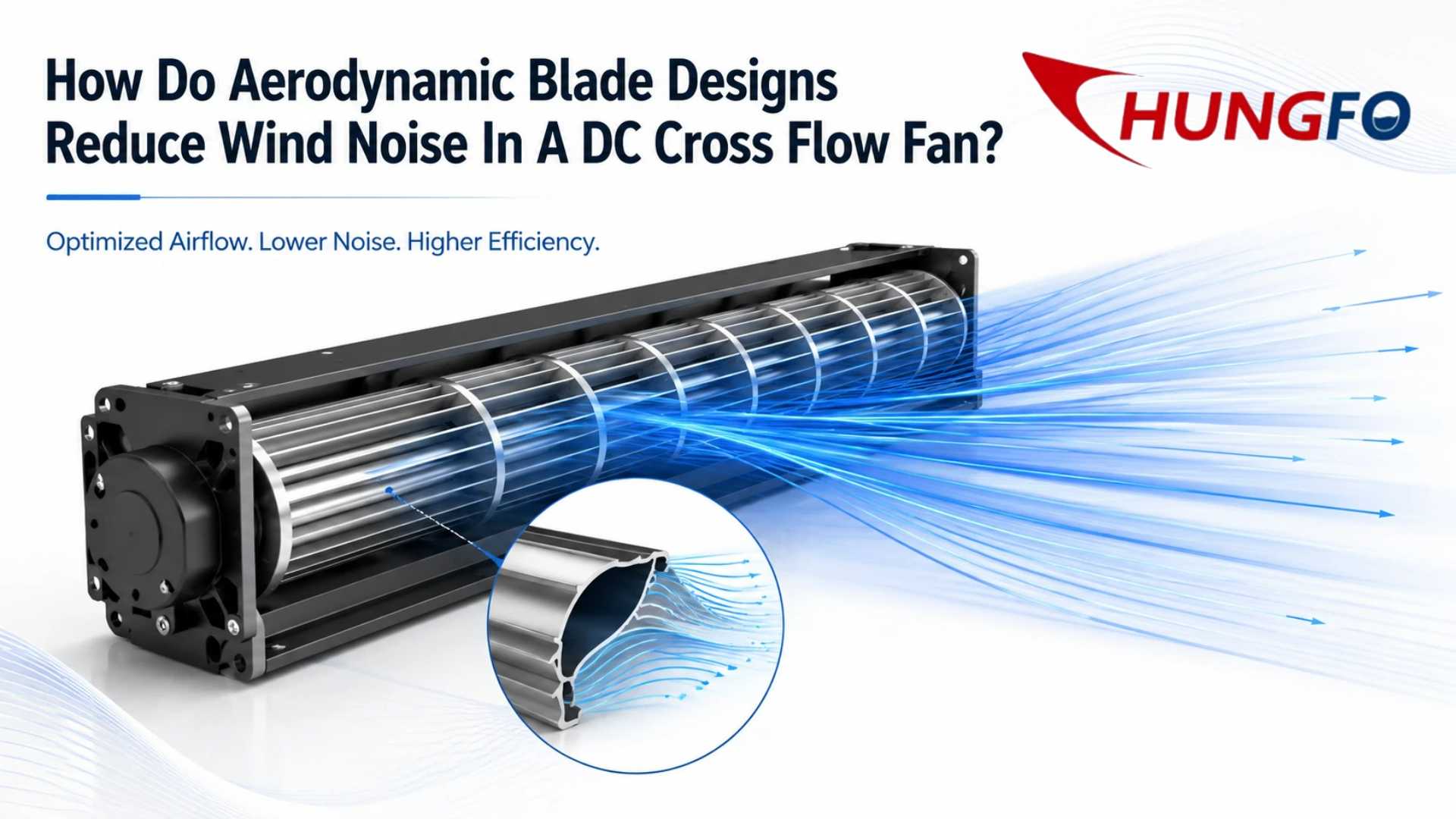
Tendencias futuras en el desarrollo de aspas aerodinámicas
La tecnología de ventiladores de refrigeración continúa evolucionando rápidamente a medida que la ingeniería computacional se vuelve más sofisticada.
La inteligencia artificial se aplica cada vez más durante la optimización de aspas. Los algoritmos de aprendizaje automático pueden evaluar miles de configuraciones de aspas e identificar patrones de flujo de aire que serían difíciles de descubrir mediante métodos de ingeniería convencionales.
El diseño biomimético de aspas es otra tendencia emergente. Los ingenieros estudian sistemas naturales de flujo de aire como las alas de los búhos, las plumas de las aves y las aletas de los peces para desarrollar geometrías de aspas capaces de reducir la turbulencia mientras mantienen un flujo de aire eficiente.
Las tecnologías de fabricación aditiva también están transformando el desarrollo de prototipos. La impresión tridimensional permite a los ingenieros evaluar rápidamente múltiples conceptos de aspas antes de comprometerse con herramientas de producción masiva.
Los materiales compuestos avanzados continúan mejorando la estabilidad estructural mientras reducen el peso y la vibración. Estos materiales permiten que los ventiladores mantengan precisión aerodinámica incluso después de años de funcionamiento continuo.
Los futuros ventiladores de flujo cruzado de CC probablemente combinarán control electrónico inteligente, optimización aerodinámica asistida por IA, materiales avanzados y fabricación de precisión para lograr niveles de ruido aún más bajos y una mayor eficiencia de refrigeración.
Por qué los fabricantes eligen Chungfo Fan
Seleccionar el socio de fabricación adecuado es tan importante como seleccionar el ventilador de refrigeración correcto.
Con años de experiencia en gestión térmica, Chungfo Fan ha establecido un sistema de fabricación completo que abarca desarrollo de productos, diseño de moldes, producción automatizada, inspección de calidad y soporte de ingeniería personalizado.
Cada producto se somete a una validación exhaustiva en laboratorio, que incluye pruebas de rendimiento del flujo de aire, medición de presión estática, análisis acústico, equilibrado dinámico, pruebas de alta y baja temperatura, pruebas de niebla salina, pruebas de vibración, evaluación de resistencia y verificación de funcionamiento continuo. Estas pruebas garantizan un rendimiento constante en condiciones industriales exigentes.
Además de fabricar productos estándar, Chungfo Fan proporciona servicios completos de desarrollo OEM y ODM. Los equipos de ingeniería trabajan estrechamente con los clientes para optimizar el flujo de aire, reducir el ruido, mejorar la eficiencia energética y personalizar productos según los requisitos de instalación.
Hoy en día, los productos de Chungfo Fan sirven a clientes de automatización industrial, tecnología médica, telecomunicaciones, refrigeración comercial, electrodomésticos inteligentes, sistemas de energía renovable,ventiladores de carga para vehículos eléctricosinfraestructura, equipos expendedores, electrónica de seguridad y numerosas otras industrias en todo el mundo.
Reflexiones finales
A medida que los sistemas electrónicos se vuelven más potentes y los espacios de instalación son cada vez más compactos, la gestión térmica seguirá desempeñando un papel decisivo en la fiabilidad de los equipos. Simplemente aumentar la potencia del motor o la velocidad del ventilador ya no es una solución eficaz para los desafíos modernos de refrigeración.
En su lugar, la ingeniería aerodinámica se ha convertido en la base del diseño de ventiladores de flujo cruzado de CC de alto rendimiento. La geometría optimizada de las aspas, la gestión inteligente del flujo de aire, la fabricación de precisión y las tecnologías avanzadas de prueba trabajan juntas para reducir el ruido del viento mientras mejoran la eficiencia del flujo de aire.
Para los fabricantes de equipos que buscan un funcionamiento más silencioso, mayor eficiencia energética y una vida útil más larga del producto, invertir en tecnología avanzada de refrigeración aerodinámica ya no es opcional: es un paso esencial hacia la creación de la próxima generación de productos electrónicos fiables. Mediante innovación continua, un estricto control de calidad y soporte de ingeniería centrado en el cliente, Chungfo Fan mantiene su compromiso de ofrecer soluciones profesionales de gestión térmica que satisfagan las necesidades cambiantes de las industrias globales.
Preguntas frecuentes
1. ¿Por qué un ventilador de flujo cruzado de CC es más silencioso que muchos ventiladores de refrigeración convencionales?
Un ventilador de flujo cruzado de CC distribuye el flujo de aire a través de una salida larga y estrecha, creando una corriente de aire más uniforme que muchos ventiladores convencionales ventiladores axialesCuando se combina con una geometría de aspas aerodinámica, motores de CC sin escobillas y un equilibrado dinámico de precisión, el ventilador genera menos turbulencia y reduce significativamente el ruido del flujo de aire. Esto hace que los ventiladores de flujo cruzado de CC sean especialmente adecuados para equipos médicos, refrigeración comercial, electrodomésticos inteligentes y dispositivos electrónicos de oficina donde el funcionamiento silencioso es esencial.
2. ¿La forma de las aspas realmente afecta el rendimiento de refrigeración?
Sí. La geometría de las aspas influye directamente en la eficiencia del flujo de aire, la presión estática y la turbulencia. La curvatura optimizada de las aspas, el ángulo de las aspas y el diseño del borde de salida ayudan a mantener el flujo de aire adherido mientras minimizan la formación de vórtices. Como resultado, el ventilador puede proporcionar un mayor flujo de aire con un menor consumo de energía y emisiones acústicas reducidas.
3. ¿Qué causa el ruido del flujo de aire en un ventilador de flujo cruzado de CC?
El ruido del flujo de aire es causado principalmente por la turbulencia del flujo de aire, las fluctuaciones de presión y la generación de vórtices alrededor de las aspas giratorias. Una geometría deficiente de las aspas, una velocidad de rotación excesiva, rutas de flujo de aire bloqueadas y una instalación incorrecta pueden aumentar el ruido aerodinámico. La optimización moderna de las aspas se centra en reducir estas perturbaciones del flujo de aire antes de que se conviertan en ruido audible.
4. ¿Cómo mejora la Dinámica de Fluidos Computacional el diseño de ventiladores?
La Dinámica de Fluidos Computacional (CFD) permite a los ingenieros simular el flujo de aire antes de fabricar prototipos físicos. Los diseñadores pueden analizar la velocidad del flujo de aire, la distribución de presión, la intensidad de la turbulencia y la transferencia de calor, lo que permite optimizar digitalmente la geometría de las aspas. Esto acorta los ciclos de desarrollo al mismo tiempo que produce soluciones de refrigeración más silenciosas y eficientes.
5. ¿Por qué es importante el equilibrado dinámico para los ventiladores de bajo ruido?
Incluso un ligero desequilibrio en el conjunto giratorio puede generar vibraciones durante el funcionamiento a alta velocidad. El equilibrado dinámico de precisión minimiza las vibraciones, reduce la tensión mecánica, prolonga la vida útil de los rodamientos y disminuye el ruido de funcionamiento. También mejora la fiabilidad general durante el funcionamiento continuo.
6. ¿Puede un motor sin escobillas reducir el ruido del ventilador?
Por supuesto. Los motores de CC sin escobillas funcionan de manera más suave que los motores con escobillas tradicionales porque eliminan la fricción de las escobillas y reducen el desgaste mecánico. Combinados con un control inteligente del motor y un diseño aerodinámico de las aspas, los motores sin escobillas contribuyen significativamente a un funcionamiento más silencioso y una vida útil más prolongada.
7. ¿Qué industrias se benefician más de los ventiladores de flujo cruzado de CC de bajo ruido?
Los ventiladores de flujo cruzado de CC de bajo ruido se utilizan ampliamente en refrigeración comercial, equipos médicos, telecomunicaciones, automatización industrial, sistemas de purificación de aire, electrodomésticos inteligentes, equipos de carga de vehículos eléctricos, instrumentos de laboratorio, máquinas expendedoras y dispositivos electrónicos de precisión. Cualquier aplicación que requiera una refrigeración eficiente y un funcionamiento silencioso puede beneficiarse de la tecnología de aspas aerodinámicas.
8. ¿Por qué elegir Chungfo Fan para soluciones de refrigeración personalizadas?
Chungfo Fan combina ingeniería aerodinámica, fabricación automatizada avanzada, pruebas de calidad integrales y amplia experiencia en OEM/ODM. Cada producto se valida mediante pruebas de flujo de aire, análisis acústico, medición de presión estática, equilibrado dinámico, pruebas de durabilidad y verificación de fiabilidad ambiental. Este enfoque de ingeniería completo permite a los clientes lograr soluciones de refrigeración fiables, energéticamente eficientes y de bajo ruido adaptadas a sus aplicaciones específicas.