Categorías
Nuevo blog
¿Cómo puede un ventilador centrífugo de 12 V prevenir la condensación de humedad en invernaderos agrícolas?
August 24 , 2026Los invernaderos agrícolas proporcionan a los productores un mejor control sobre la temperatura, la humedad, la luz, la ventilación y las condiciones de los cultivos. Se utilizan ampliamente para verduras, flores, plántulas, cultivos de investigación y agricultura moderna en ambientes controlados. Sin embargo, crear un entorno de cultivo relativamente cerrado también genera un desafío importante: la acumulación de humedad y la condensación.
Cuando el aire del invernadero contiene un alto nivel de vapor de agua y la temperatura de una superficie cae por debajo del punto de rocío, el vapor de agua puede convertirse en agua líquida. La condensación puede aparecer en las hojas de las plantas, películas de invernadero, paneles de vidrio, estructuras metálicas, tuberías, carcasas de equipos y otras superficies relativamente frías.
Este problema es especialmente común durante los períodos de la tarde, la noche y las primeras horas de la mañana. Durante estos períodos, la temperatura del invernadero puede descender rápidamente mientras que la humedad generada por las plantas, el riego, el suelo y los medios de cultivo permanece dentro de la estructura.
La condensación persistente puede aumentar la humedad de las hojas y crear un ambiente más favorable para ciertas enfermedades fúngicas. También puede contribuir a la corrosión de componentes metálicos, la exposición de equipos eléctricos a la humedad y condiciones ambientales inestables.
Por estas razones, la ventilación del invernadero no debería centrarse únicamente en eliminar calor. Un sistema bien diseñado también debería proporcionar una circulación de aire controlada.
Un ventilador centrífugo de 12v puede desempeñar un papel importante en este proceso. No elimina directamente el vapor de agua del aire del invernadero, pero puede mover el aire húmedo lejos de las zonas estancadas, mejorar la distribución del aire, favorecer la ventilación y reducir las condiciones que fomentan la condensación localizada.
Comprender la condensación de humedad en los invernaderos agrícolas
Para comprender cómo un ventilador centrífugo puede ayudar a controlar la condensación, es necesario entender de dónde proviene la humedad del invernadero.
Las plantas son una de las mayores fuentes de vapor de agua dentro de un invernadero. Las plantas absorben agua mediante sus sistemas radiculares y liberan parte de esa agua a través de sus hojas en un proceso natural llamado transpiración.
Por lo tanto, un invernadero con una alta densidad de cultivos puede recibir un suministro continuo de humedad procedente de las plantas.
El riego es otra fuente importante. El riego por goteo, el riego por aspersión, los sistemas hidropónicos, el cultivo en suelo y los medios de cultivo húmedos pueden contribuir a la acumulación de humedad.
Durante las horas de luz, la radiación solar normalmente aumenta la temperatura del invernadero. El aire cálido puede contener más vapor de agua, por lo que la condensación puede no ser visible de inmediato incluso cuando el invernadero contiene una cantidad considerable de humedad.
Por la noche, las condiciones ambientales cambian.
A medida que disminuye la temperatura, también disminuye la capacidad del aire para retener vapor de agua. Si la cantidad de humedad en el aire permanece alta, el aire puede alcanzar finalmente su punto de rocío.
El punto de rocío puede describirse como la temperatura a la que el aire se satura de vapor de agua bajo las condiciones de humedad existentes. Cuando una superficie se enfría por debajo del punto de rocío, el vapor de agua puede condensarse sobre esa superficie.
Esto significa que la condensación en el invernadero no es causada simplemente por una “humedad alta”. Es el resultado de la relación entre el contenido de humedad, la temperatura del aire y la temperatura de la superficie.
¿Por qué la condensación empeora durante la noche?
Muchos operadores de invernaderos observan que el invernadero parece normal durante el día, pero desarrolla gotas de agua visibles durante la noche o las primeras horas de la mañana.
Hay varias razones.
La primera es la reducción de temperatura.
La segunda es la generación continua de humedad.
Las plantas no dejan de liberar humedad inmediatamente cuando desaparece la luz solar. El suelo, los medios de cultivo y las zonas de riego también pueden seguir aportando vapor de agua al invernadero.
A medida que baja la temperatura, el aire puede retener menos humedad.
Al mismo tiempo, las cubiertas del invernadero pueden volverse más frías que el aire interior circundante. Las estructuras metálicas y otros componentes también pueden enfriarse rápidamente.
Esto puede crear superficies localizadas donde la temperatura alcanza o cae por debajo del punto de rocío.
Las hojas de las plantas pueden experimentar el mismo efecto.
Si la temperatura de las hojas disminuye mientras el aire que rodea el dosel vegetal permanece húmedo, puede formarse condensación en las hojas.
Por eso, la gestión nocturna del invernadero es especialmente importante cuando el objetivo es prevenir la condensación.
¿Cómo ayuda la circulación del aire a reducir la condensación?
Una pregunta común es sencilla: si un ventilador no elimina agua, ¿cómo puede prevenir la condensación?
La respuesta es el movimiento controlado del aire.
Sin una circulación suficiente, el aire alrededor del dosel vegetal puede estancarse. Las plantas liberan humedad continuamente en este entorno local, lo que provoca que la humedad alrededor de las hojas sea mayor que la humedad promedio del invernadero.
Si el aire húmedo permanece en el mismo lugar, puede aumentar la posibilidad de una humedad prolongada en las hojas.
Un ventilador centrífugo de 12v crea un flujo de aire controlado que puede alejar el aire estancado del dosel vegetal y mezclarlo con aire de otras zonas.
Esto puede proporcionar varios beneficios.
Puede reducir la acumulación localizada de humedad.
Puede mejorar el intercambio de aire entre diferentes partes del invernadero.
Puede reducir ciertas formas de estratificación del aire.
Puede hacer que la distribución de temperatura sea más uniforme.
También puede ayudar a mover el aire húmedo hacia zonas donde la ventilación de extracción pueda eliminarlo.
Por lo tanto, la función principal de un ventilador en el control de la condensación no es “secar las gotas de agua”. Su función es mejorar las condiciones ambientales que determinan si se produce condensación.
Ventilador centrífugo de 12 V frente a ventilador axial
Tanto los ventiladores centrífugos como los axiales se utilizan ampliamente en sistemas de ventilación, pero tienen diferentes características de flujo de aire.
Un ventilador axial normalmente mueve el aire en una dirección generalmente paralela al eje del ventilador. Este diseño puede ser muy eficaz cuando es necesario mover una gran cantidad de aire a través de un entorno con una resistencia relativamente baja.
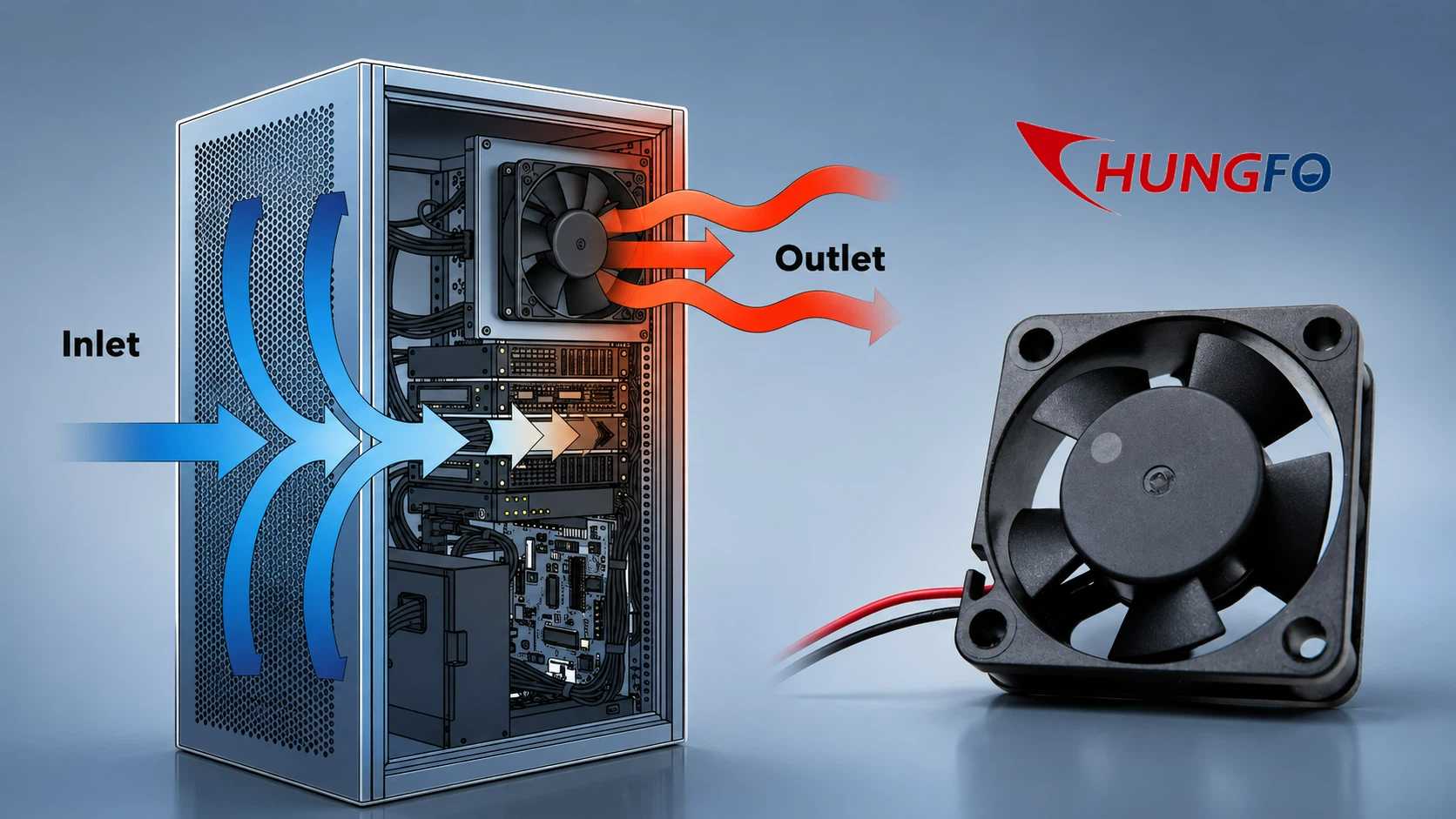
Un ventilador centrífugo aspira aire hacia el impulsor y lo redirige a través de una salida con una dirección diferente. Este diseño puede ser especialmente útil cuando el ventilador necesita superar la resistencia del sistema.
Por ejemplo, los equipos agrícolas pueden contener conductos, filtros, rejillas, estructuras de guía, salidas estrechas o trayectorias compactas de flujo de aire interno.
En estas situaciones, la capacidad de presión de un ventilador centrífugo puede volverse especialmente importante.
La configuración de 12 V CC también hace que este tipo de ventilador sea atractivo para equipos agrícolas de bajo voltaje.
Los sistemas modernos de invernaderos inteligentes utilizan cada vez más sensores, controladores, baterías, sistemas de energía solar y otros dispositivos electrónicos de bajo voltaje.
Por lo tanto, un ventilador de 12 V puede integrarse en muchas arquitecturas de control sin requerir un sistema de motor de alto voltaje.
Por qué la presión estática es importante en la selección de ventiladores para invernaderos
El flujo de aire es una de las primeras especificaciones que los ingenieros suelen considerar al seleccionar un ventilador.
Sin embargo, el flujo de aire máximo no es suficiente para predecir el rendimiento real.
Un ventilador instalado en un sistema real de invernadero puede necesitar impulsar aire a través de un conducto, filtro, rejilla, abertura estrecha o varias curvas.
Cada uno de estos componentes crea resistencia.
A medida que aumenta la resistencia del sistema, el flujo de aire real puede disminuir.
Por esta razón, los ingenieros deben evaluar tanto el flujo de aire como la presión estática al seleccionar un ventilador centrífugo.
Un ventilador con un alto flujo de aire libre no necesariamente proporcionará el flujo de aire requerido después de instalarse en un sistema restrictivo.
El enfoque correcto es identificar las condiciones reales de funcionamiento y compararlas con la curva de rendimiento del ventilador.
Esto es especialmente importante para equipos compactos de invernadero donde las trayectorias del flujo de aire suelen ser pequeñas y complicadas.
¿Cómo pueden los ventiladores pequeños ayudar a los invernaderos grandes?
Los invernaderos agrícolas grandes suelen requerir grandes sistemas de extracción para la ventilación general. Sin embargo, los grandes ventiladores de extracción no siempre pueden eliminar todas las zonas locales de aire estancado.
Los cultivos densos pueden crear espacios restringidos entre las hojas.
Los estantes de plántulas pueden bloquear el flujo de aire natural.
Las paredes y las esquinas pueden desarrollar áreas con movimiento de aire limitado.
Los equipos instalados entre las zonas de cultivo pueden crear obstáculos adicionales para el flujo de aire.
En estas situaciones, los ventiladores de circulación más pequeños pueden complementar el sistema principal de ventilación.
En lugar de intentar usar un solo ventilador grande para resolver todos los problemas de flujo de aire, un invernadero puede utilizar una combinación de extracción centralizada y circulación localizada.
Para equipos agrícolas inteligentes compactos, también se pueden instalar ventiladores pequeños dentro de controladores ambientales, sistemas de monitoreo, equipos de riego automatizado, cámaras de crecimiento vegetal y otros módulos electrónicos.
En estas aplicaciones, se puede considerar un soplador de 5 V cuando el equipo utiliza una arquitectura de alimentación de 5 V y requiere un flujo de aire compacto.
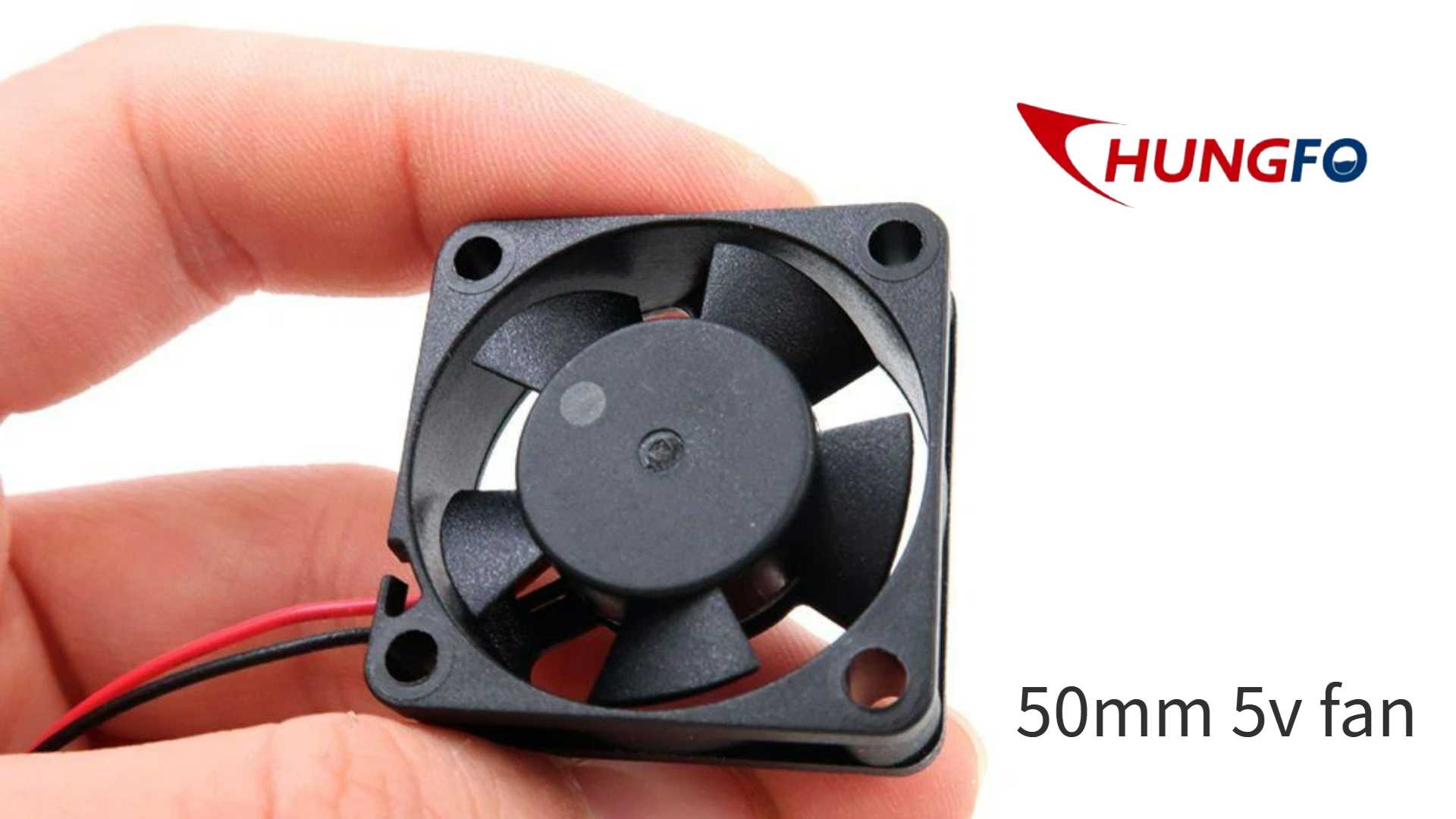
Un ventilador de 75 mm puede ser útil cuando el espacio de instalación requiere un tamaño de ventilador relativamente compacto.
Unventilador de 24 V de 92 mmpuede considerarse cuando el equipo requiere un formato de ventilador más grande combinado con alimentación de 24 V CC.
La elección correcta depende del flujo de aire, la presión, las dimensiones, el voltaje, el ruido y los requisitos de instalación.
Estos productos más pequeños no deben considerarse sustitutos de los grandes sistemas de extracción de invernaderos. Son componentes complementarios diseñados para mejorar el flujo de aire local.
La importancia de la posición de instalación del ventilador
El rendimiento del ventilador depende de más que el motor y el impulsor.
La ubicación de instalación puede tener una influencia significativa en el rendimiento real del sistema.
Si un ventilador se instala en un área que ya tiene un flujo de aire natural fuerte, la mejora puede ser limitada.
Si el ventilador está ubicado cerca de una zona estancada, el dosel del cultivo, una carcasa de equipo o una esquina con poca ventilación, puede proporcionar un flujo de aire mucho más útil.
Los diseñadores de invernaderos pueden utilizar ventiladores para crear una ruta de circulación planificada.
El aire puede moverse a lo largo de la longitud de un invernadero, a través de los doseles de los cultivos o hacia áreas conectadas con la ventilación de extracción.
También se pueden utilizar estructuras de guía para redirigir el flujo de aire.
Sin embargo, el objetivo no debe ser crear la mayor velocidad de aire posible.
Un flujo de aire directo excesivo puede crear estrés innecesario para las plantas delicadas y puede acelerar la pérdida de humedad.
El objetivo es un movimiento de aire controlado y razonablemente uniforme.
Uso de sensores de temperatura y humedad
Los sistemas modernos de invernadero dependen cada vez más del control ambiental automático.
Los sensores de temperatura y los sensores de humedad pueden proporcionar información continua a un controlador.
El controlador puede determinar entonces cuándo deben funcionar los ventiladores de circulación.
Por ejemplo, si la temperatura nocturna está bajando mientras la humedad aumenta, el controlador puede iniciar un ventilador de circulación a un nivel de funcionamiento más bajo.
Si la humedad continúa aumentando, el sistema de extracción puede activarse o incrementarse.
Si la temperatura se vuelve demasiado baja, la estrategia de ventilación puede reducirse y se puede introducir calefacción si está disponible.
Este tipo de control escalonado puede ser más eficiente que hacer funcionar continuamente todos los dispositivos de ventilación.
La posición de los sensores también es importante.
Un sensor de humedad instalado directamente en la trayectoria de descarga de un ventilador puede recibir una condición de flujo de aire que no representa el ambiente real del invernadero.
Por lo tanto, los sensores deben instalarse donde las lecturas representen el ambiente del cultivo con la mayor precisión posible.
Combinar los datos de temperatura y humedad es especialmente útil porque el riesgo de condensación depende tanto del contenido de humedad como de la temperatura de la superficie.
Por qué la ventilación invernal del invernadero requiere atención especial
El invierno es una de las estaciones más difíciles para la gestión de la condensación.
Las temperaturas exteriores son bajas, mientras que los operadores de invernaderos necesitan conservar suficiente calor para el crecimiento de los cultivos.
Por lo tanto, la diferencia de temperatura entre el aire interior y exterior puede ser significativa.
Durante la noche, las cubiertas del invernadero y las hojas de las plantas pueden enfriarse lo suficiente como para alcanzar el punto de rocío.
A primera vista, la solución obvia puede parecer aumentar la ventilación.
Sin embargo, una ventilación excesiva puede eliminar calor valioso.
Por eso, la gestión de la condensación invernal no debe depender únicamente de un gran flujo de aire de extracción.
Un mejor enfoque es utilizar circulación controlada para reducir el aire húmedo estancado mientras se mantiene una temperatura adecuada en el invernadero.
Entonces se pueden utilizar ciclos cortos de ventilación cuando las condiciones requieran una eliminación adicional de humedad.
La calefacción también puede combinarse con la circulación.
Al mantener temperaturas del aire y de las superficies más estables, el sistema puede reducir la probabilidad de que las superficies alcancen el punto de rocío.
Esto demuestra un principio importante: el control de la condensación es un problema a nivel de sistema en lugar de un problema de un solo ventilador.
Cómo ayudan los ventiladores a gestionar la humedad alrededor de las hojas de las plantas
El dosel del cultivo es una de las zonas más importantes de un invernadero.
Las hojas liberan vapor de agua directamente al aire circundante.
Si el aire alrededor de las hojas permanece estancado, la humedad local puede ser mayor que la humedad promedio del invernadero.
El flujo de aire controlado puede ayudar a reemplazar el aire húmedo cerca del dosel con aire del ambiente circundante.
Esto puede favorecer una eliminación más rápida de la humedad y reducir la humedad prolongada de las hojas.
Sin embargo, un flujo de aire más fuerte no es automáticamente mejor.
Los diferentes cultivos tienen distintos requisitos ambientales.
Las plántulas, las flores delicadas, las verduras de hoja verde y los cultivos maduros pueden reaccionar de manera diferente al movimiento del aire.
Por lo tanto, la velocidad del ventilador y la dirección de instalación deben seleccionarse según el cultivo, la etapa de crecimiento, la distribución del invernadero y la estrategia de ventilación.
El objetivo es una circulación estable en lugar de un flujo de aire máximo.
Eficiencia energética de los ventiladores de CC de 12 V
Los equipos de ventilación agrícola pueden funcionar durante muchas horas cada día.
Por lo tanto, la eficiencia energética es una consideración importante.
Un ventilador de CC de 12 V puede integrarse con baterías, sistemas de energía solar y controladores de bajo voltaje.
Esto puede ser especialmente útil para instalaciones agrícolas remotas o sistemas donde se requiere energía de respaldo.
Los ventiladores de CC también pueden combinarse con control automático de velocidad.
En lugar de funcionar a máxima velocidad de manera continua, el ventilador puede operar según las condiciones ambientales.
Durante la parte más calurosa del día, el sistema puede priorizar la eliminación del calor.
Durante la noche, la prioridad puede cambiar hacia el mantenimiento de la circulación del aire y la reducción de la acumulación de humedad.
Por lo tanto, el mismo ventilador puede respaldar diferentes estrategias de control ambiental durante un período de 24 horas.
Aplicaciones más allá de la estructura del invernadero
El uso de ventiladores de enfriamiento y circulación no se limita al propio invernadero.
Los sistemas agrícolas modernos contienen muchos dispositivos electrónicos.
Estos pueden incluir controladores ambientales, concentradores de sensores, controladores de riego, sistemas de iluminación LED, sistemas automatizados de nutrientes, módulos de comunicación, equipos de adquisición de datos y otro hardware de control.
Los componentes electrónicos generan calor durante el funcionamiento.
Si el calor no puede escapar de una carcasa, la temperatura interna puede aumentar significativamente.
Los pequeños ventiladores de CC y los sopladores centrífugos pueden proporcionar flujo de aire interno para alejar el calor de los componentes sensibles.
Para equipos compactos, el ventilador puede necesitar funcionar en un espacio muy limitado.
Aquí es donde los formatos de ventiladores compactos adquieren valor.
El ventilador seleccionado para un controlador agrícola inteligente puede tener requisitos completamente diferentes a los del gran ventilador de extracción instalado en la pared del invernadero.
Un sistema puede priorizar el rendimiento de presión y las dimensiones compactas, mientras que otro puede priorizar un gran flujo de aire y la eficiencia energética.
Cómo seleccionar el ventilador adecuado para un invernadero agrícola
La primera consideración es el voltaje.
El voltaje del ventilador debe coincidir con la arquitectura eléctrica del equipo o ser compatible con la fuente de alimentación.
La segunda consideración es el espacio de instalación.
Mida la longitud, el ancho, la altura, la posición de montaje, el área de entrada y el área de salida disponibles antes de seleccionar el producto.
La tercera consideración es el flujo de aire.
Determine cuánto aire debe moverse en condiciones reales de funcionamiento.
La cuarta consideración es la presión estática.
Si el ventilador debe funcionar a través de un conducto, filtro, rejilla o salida estrecha, calcule la resistencia esperada del sistema.
La quinta consideración es el ruido.
Los requisitos de ruido de los invernaderos pueden ser menos exigentes que los de las aplicaciones residenciales, pero las instalaciones de investigación, los laboratorios, las granjas comerciales y las áreas accesibles para trabajadores aún pueden requerir niveles de ruido controlados.
La sexta consideración es el entorno de funcionamiento.
Los invernaderos agrícolas suelen ser húmedos. Por lo tanto, los materiales del producto, la construcción del motor, los rodamientos y la protección eléctrica deben evaluarse para la aplicación real.
La séptima consideración es la vida útil de funcionamiento.
Un ventilador destinado a funcionar continuamente o durante muchas horas cada día debe evaluarse para garantizar su fiabilidad a largo plazo.
Por qué la fiabilidad de los ventiladores es importante en la agricultura
Un ventilador de ventilación para invernadero puede funcionar miles de horas durante su vida útil.
Si un ventilador falla durante un período crítico, las consecuencias pueden extenderse más allá del propio ventilador.
Una falla de ventilación puede provocar un aumento de la temperatura.
Una falla de circulación puede crear zonas estancadas.
Una falla en el control de humedad puede aumentar el riesgo de condensación.
Por esta razón, la calidad del ventilador debe considerarse como parte de la estrategia general de fiabilidad del invernadero.
Los factores importantes incluyen la calidad del motor, la selección de los rodamientos, el equilibrio del impulsor, el material del bastidor, la protección eléctrica, la consistencia de producción y las pruebas.
El equilibrado dinámico es particularmente importante para los componentes giratorios.
Un impulsor desequilibrado puede generar vibraciones y ruido y puede reducir la vida útil.
Pruebas en condiciones realistas
Las especificaciones de laboratorio son importantes, pero las aplicaciones agrícolas suelen requerir consideraciones adicionales.
Un entorno de invernadero puede incluir alta humedad, fluctuaciones de temperatura, polvo, pulverización de riego, exposición a fertilizantes y largos períodos de funcionamiento.
Por lo tanto, el ventilador debe evaluarse bajo condiciones que representen razonablemente su aplicación prevista.
Las pruebas pueden incluir pruebas de flujo de aire, pruebas de presión, medición de ruido, pruebas de temperatura, evaluación de vibraciones y otras evaluaciones de fiabilidad.
Para los fabricantes de equipos agrícolas, seleccionar un proveedor de ventiladores con capacidades de prueba adecuadas puede ayudar a reducir el riesgo de problemas de rendimiento después de la producción en masa.
Cómo Guangdong Chungfo respalda las aplicaciones de ventiladores agrícolas
Guangdong Chungfo se centra en el desarrollo y la fabricación de ventiladores DC, ventiladores AC, ventiladores centrífugos, sopladores, ventiladores axiales y otros productos de flujo de aire.
La empresa cuenta con capacidades que abarcan el diseño de productos, el moldeo por inyección, la producción electrónica, el ensamblaje y las pruebas de productos.
Sus capacidades de prueba incluyen equipos de equilibrado dinámico, equipos de prueba de flujo de aire y presión, cámaras de prueba de alta y baja temperatura, instalaciones de prueba de ruido, equipos de prueba de corrosión por niebla salina y otros equipos de inspección.
Estas capacidades respaldan el desarrollo de productos y la verificación de calidad para diferentes aplicaciones.
Para los fabricantes de equipos agrícolas, el ventilador adecuado se determina no solo por el voltaje o el tamaño.
Los ingenieros deben considerar el flujo de aire, la presión estática, las dimensiones, el ruido, el entorno operativo, el ciclo de trabajo, el método de control y las condiciones de instalación.
Guangdong Chungfo puede evaluar los requisitos de los ventiladores según estos parámetros de aplicación y proporcionar productos de flujo de aire adecuados para equipos de invernadero y sistemas de automatización agrícola.
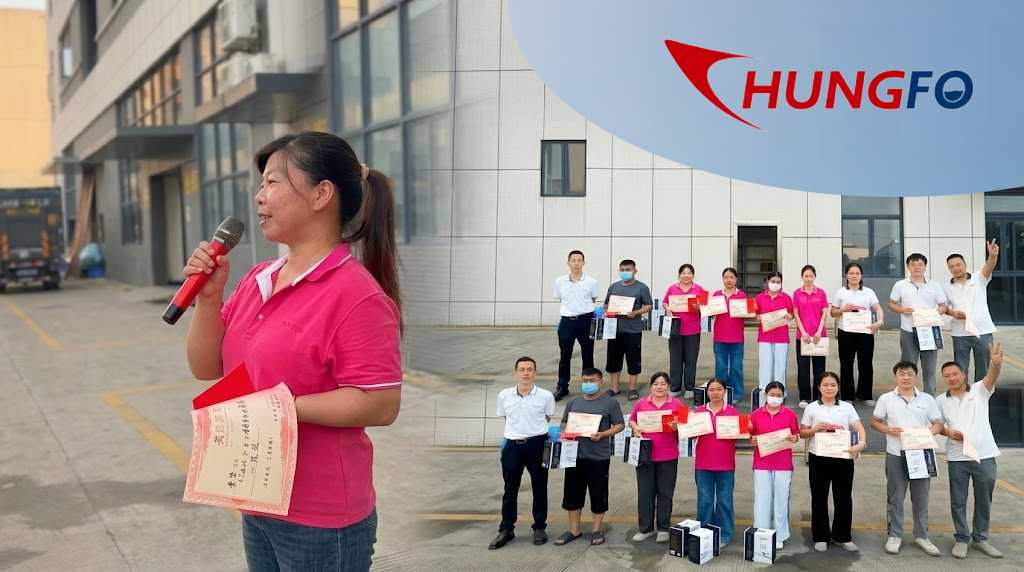
Certificaciones y gestión de calidad
La gestión de calidad es una consideración importante al seleccionar un proveedor de ventiladores a largo plazo.
Guangdong Chungfo y sus sistemas de producción relacionados cuentan con certificaciones o calificaciones de cumplimiento que incluyen ISO9001, ISO14000, CE, UL, TÜV, CCC, SGS, RoHS, REACH e IATF16949.
Ciertos productos cuentan con certificación de producto UL, con la información de listado de producto UL GPWV2.E311396.
Debido a que el alcance de la certificación varía según el producto y la aplicación, los clientes deben confirmar los documentos de certificación válidos y los modelos de producto aplicables para cada proyecto específico.
Un enfoque sistemático para el control de condensación en invernaderos
Una estrategia fiable de control de condensación debe considerar el entorno completo del invernadero.
Debe considerarse la transpiración de las plantas.
Debe considerarse el riego.
Debe monitorearse la temperatura interior y exterior.
Debe evaluarse el movimiento del aire.
La capacidad de extracción debe ser suficiente.
La entrada de aire fresco debe diseñarse correctamente.
Puede ser necesario calefaccionar en condiciones frías.
Los sensores deben colocarse correctamente.
Los ventiladores deben controlarse según las condiciones ambientales reales.
Este enfoque es mucho más eficaz que simplemente instalar un ventilador grande y hacerlo funcionar continuamente.
Durante el día, la ventilación puede centrarse en la eliminación del calor.
Durante la noche, la circulación puede ayudar a reducir el aire húmedo estancado.
Cuando la humedad se vuelve excesiva, el escape controlado puede eliminar la humedad.
Cuando las temperaturas se vuelven demasiado bajas, la ventilación puede reducirse y puede utilizarse calefacción cuando corresponda.
En invernaderos grandes, la ventilación centralizada y la circulación localizada pueden funcionar juntas.
En equipos agrícolas compactos, pequeños ventiladores centrífugos y sopladores pueden gestionar el calor interno y el flujo de aire.
Conclusión
La condensación de humedad en los invernaderos agrícolas es causada por la interacción de la humedad, la temperatura, la temperatura de la superficie y el flujo de aire.
Un ventilador centrífugo de 12v no elimina directamente el vapor de agua del aire del invernadero. Su función principal es mejorar el flujo de aire.
Al mover el aire húmedo lejos de las copas de las plantas, reducir las zonas estancadas, mejorar la distribución del aire y favorecer la ventilación de escape, un ventilador centrífugo puede ayudar a crear condiciones menos favorables para la condensación.
Por lo tanto, para los sistemas modernos de invernadero, la selección de un ventilador debe implicar más que comparar el flujo de aire máximo.
Los ingenieros deben evaluar el voltaje, el flujo de aire, la presión estática, las dimensiones, el ruido, el entorno operativo, la fiabilidad y los requisitos de control.
Un pequeño ventilador de circulación puede complementar un gran sistema de escape.
Un soplador centrífugo compacto puede ser compatible con un controlador inteligente de invernadero.
Un ventilador de bajo voltaje puede integrarse con un sistema alimentado por batería o energía solar.
Un ventilador controlado adecuadamente puede funcionar según la temperatura y la humedad en lugar de funcionar continuamente.
Este enfoque a nivel de sistema puede mejorar la eficiencia energética y proporcionar un control ambiental más estable.
Para los fabricantes de equipos agrícolas y los integradores de sistemas de invernadero, el ventilador ideal es el que se adapta a la aplicación real en lugar de simplemente el ventilador con el mayor rendimiento anunciado.
Con una selección, instalación, control e integración del sistema adecuados del ventilador, la circulación del aire puede convertirse en una parte importante de la gestión de la humedad del invernadero.
Guangdong Chungfo proporciona una variedad de ventiladores de CC, ventiladores de CA, ventiladores centrífugos, sopladores, ventiladores axiales y otros productos de flujo de aire para diferentes aplicaciones de equipos. Al considerar conjuntamente el voltaje, las dimensiones, el flujo de aire, la presión estática, el ruido, las condiciones ambientales y los requisitos de instalación, los fabricantes pueden desarrollar sistemas de gestión del aire más fiables para la agricultura moderna.
Preguntas frecuentes
¿Puede un ventilador centrífugo de 12v prevenir completamente la condensación?
No. Un ventilador no puede eliminar directamente la humedad del invernadero. Ayuda a controlar la condensación al mejorar el flujo de aire y reducir el aire húmedo estancado. La gestión eficaz de la condensación normalmente combina circulación, ventilación, control de temperatura, gestión del riego y un diseño adecuado del invernadero.
¿Por qué la condensación suele aparecer por la noche?
Las temperaturas nocturnas suelen disminuir mientras que la humedad generada por las plantas y los medios de cultivo permanece dentro del invernadero. A medida que disminuyen las temperaturas del aire y de las superficies, estas pueden alcanzar el punto de rocío y el vapor de agua puede condensarse.
¿Es un ventilador centrífugo mejor que un ventilador axial para aplicaciones de invernadero?
Ningún tipo es universalmente mejor. Los ventiladores axiales pueden ser eficaces para un alto flujo de aire y ventilación de baja resistencia. Los ventiladores centrífugos pueden ser ventajosos cuando el sistema contiene conductos, filtros, salidas restringidas u otra resistencia al flujo de aire.
¿Por qué es importante la presión estática?
La presión estática representa la capacidad del ventilador para mover aire contra la resistencia del sistema. Cuando el aire pasa por conductos, filtros, rejillas o salidas estrechas, la resistencia aumenta. Un ventilador debe tener suficiente capacidad de presión para mantener un flujo de aire útil en esas condiciones.
¿Puede utilizarse un ventilador pequeño en un invernadero grande?
Sí. Los ventiladores pequeños pueden utilizarse para la circulación localizada, especialmente alrededor de las copas de los cultivos, estanterías de plántulas, zonas de equipos, esquinas y áreas donde el sistema principal de ventilación no genera suficiente flujo de aire.
¿Para qué se utiliza un soplador de 5v?
Un soplador de 5v puede considerarse para equipos electrónicos agrícolas compactos y equipos de invernadero inteligente que utilizan un sistema eléctrico de 5V y requieren flujo de aire localizado o refrigeración de componentes.
¿Cuándo sería útil un ventilador de 75mm?
Un ventilador de 75mm puede considerarse cuando el equipo tiene un espacio de instalación limitado y requiere una solución compacta de refrigeración o circulación. La selección final aún debe basarse en el flujo de aire, la presión, el ruido, el voltaje y los requisitos de montaje.
¿Para qué es adecuado un ventilador de 92mm 24v?
Un ventilador de 92 mm y 24 V puede considerarse para equipos que requieren un formato de ventilador relativamente compacto y funcionan con un sistema de alimentación de CC de 24 V. Las aplicaciones pueden incluir armarios de control, electrónica agrícola, equipos de control ambiental y otros sistemas compactos.
¿Los ventiladores de invernadero deben funcionar continuamente?
No necesariamente. El control automático basado en la temperatura, la humedad, el tiempo y los requisitos de los cultivos puede proporcionar una mejor eficiencia energética y control ambiental.
¿Dónde debe instalarse un ventilador de circulación?
La mejor ubicación depende de la distribución del invernadero. Las zonas cercanas a las copas de los cultivos, las esquinas, los equipos, las paredes, los estantes y otras áreas con aire estancado pueden beneficiarse de un flujo de aire adicional. El ventilador debe colocarse para crear una circulación controlada en lugar de un flujo de aire directo excesivo.
¿Pueden los ventiladores por sí solos resolver los problemas de humedad del invernadero?
No. Los ventiladores principalmente mueven el aire. Si la generación de humedad es mayor que la eliminación de humedad, esta puede permanecer alta. Una gestión eficaz debe combinar la circulación con una ventilación adecuada, el control del riego, la gestión de la temperatura y el diseño del invernadero.
¿Qué certificaciones tiene Guangdong Chungfo?
Guangdong Chungfo y sus sistemas de producción relacionados cuentan con certificaciones o cualificaciones de cumplimiento que incluyen ISO9001, ISO14000, CE, UL, TÜV, CCC, SGS, RoHS, REACH e IATF16949. Ciertos productos cuentan con certificación de producto UL, con la información de listado de producto UL GPWV2.E311396. El alcance de la certificación debe confirmarse según el producto específico y el certificado válido.