Categorías
Nuevo blog
¿Cómo determinan los circuitos de conmutación el principio de funcionamiento del ventilador de refrigeración en las placas PCB?
July 31 , 2026A medida que los dispositivos electrónicos modernos se vuelven más compactos y potentes en términos computacionales, la gestión térmica se ha convertido en una de las consideraciones de diseño más críticas. Ahora se espera que las placas de circuito impreso (PCB) admitan componentes electrónicos cada vez más densos, procesadores de alta velocidad, módulos de IA, chips de comunicación y sistemas de gestión de energía, todos los cuales generan una cantidad considerable de calor.
Entre las muchas soluciones térmicas disponibles, el ventilador de refrigeración sigue siendo uno de los métodos más eficaces y económicos para mantener temperaturas de funcionamiento seguras. Sin embargo, el rendimiento de un ventilador de refrigeración está determinado por mucho más que el diseño de sus aspas o el tamaño de su motor. Uno de los factores más importantes, aunque con frecuencia ignorado, es el circuito de conmutación dentro del motor de corriente continua sin escobillas.
Comprender cómo los circuitos de conmutación influyen en el principio de funcionamiento del ventilador de refrigeración ayuda a los ingenieros a elegir el ventilador adecuado para aplicaciones con PCB, al tiempo que mejora la fiabilidad, la eficiencia y la vida útil del sistema.
Ya sea diseñando equipos de control industrial, hardware de comunicación, dispositivos médicos o productos electrónicos de consumo, comprender esta relación es esencial.
Este artículo explica el principio de funcionamiento del ventilador de refrigeración desde la perspectiva de los circuitos electrónicos de conmutación, mientras analiza soluciones prácticas de refrigeración para PCB utilizadas en la fabricación electrónica moderna.
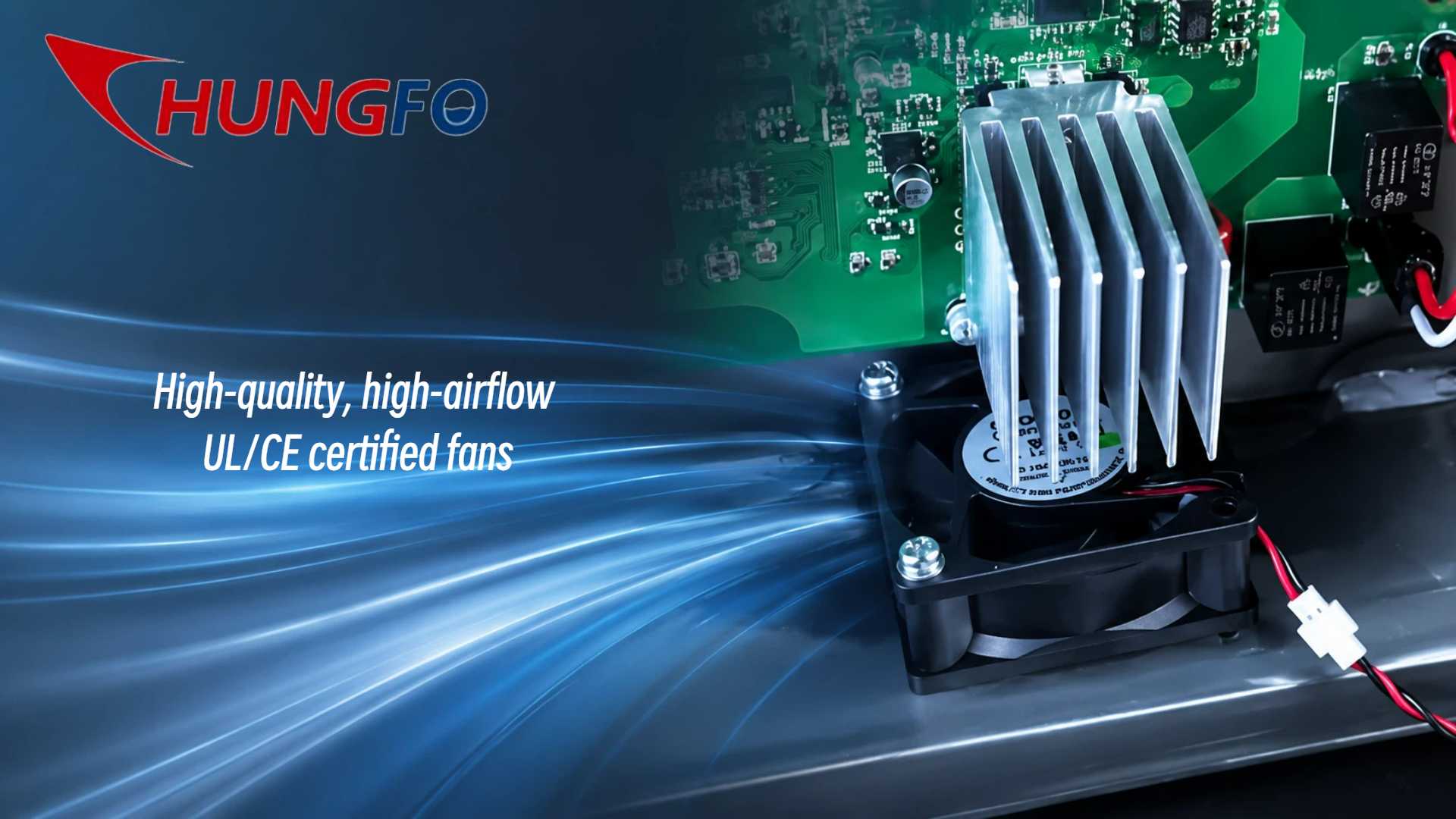
Por qué la refrigeración de PCB se ha vuelto más importante que nunca
La PCB promedio actual incorpora una potencia de procesamiento significativamente mayor que las placas producidas hace solo una década. Los componentes siguen reduciéndose mientras la densidad de potencia continúa aumentando.
Las fuentes comunes de calor en las PCB incluyen:
Microprocesadores
MOSFET de potencia
Reguladores de voltaje
Chips FPGA
CI de comunicación
Controladores LED
Fuentes de alimentación
Controladores industriales
El calor excesivo afecta a cada componente electrónico de manera diferente, pero las consecuencias generales siguen siendo similares.
Reducción de la vida útil de los componentes
Apagados inesperados del sistema
Limitación de frecuencia del reloj
Errores de comunicación
Fatiga de las uniones de soldadura
Envejecimiento prematuro de los condensadores
Menor fiabilidad del producto
Debido a que los disipadores de calor pasivos finalmente alcanzan sus límites térmicos, el flujo de aire activo proporcionado por unventilador de refrigeración de PCB a menudo se vuelve necesario.
Comprendiendo el principio de funcionamiento del ventilador de refrigeración
Un ventilador de refrigeración moderno de corriente continua sin escobillas consta de varios componentes clave.
Rotor con imanes permanentes
Bobinados del estator
Sensores de efecto Hall
CI controlador
Circuito electrónico de conmutación
Aspas del ventilador
A diferencia de los motores con escobillas, los motores sin escobillas no tienen escobillas de carbono que hagan contacto eléctrico físico con el rotor.
En su lugar, un circuito electrónico de conmutación cambia continuamente la corriente a través de múltiples bobinados del estator según la posición del rotor.
Este proceso de conmutación crea un campo magnético giratorio.
El rotor con imanes permanentes sigue este campo magnético giratorio, haciendo que las aspas roten y generen flujo de aire.
Aunque el proceso parece sencillo desde el exterior, la calidad de la conmutación electrónica determina directamente la eficiencia con la que funciona el ventilador.
¿Qué es un circuito de conmutación electrónica?
El circuito de conmutación funciona como el cerebro de cada ventilador de refrigeración sin escobillas.
Sus responsabilidades principales incluyen:
Detección de la posición del rotor
Conmutación de la sincronización de corriente
Control del arranque del motor
Mantenimiento de la estabilidad de rotación
Reducción de la vibración
Protección contra condiciones de rotor bloqueado
Gestión del control de velocidad PWM
Los circuitos integrados controladores modernos integran muchas de estas funciones en encapsulados semiconductores compactos, lo que hace que los ventiladores sin escobillas actuales sean mucho más eficientes que las generaciones anteriores.
Sin conmutación electrónica, el motor simplemente no puede girar.
Cómo los sensores Hall guían la conmutación
Muchos ventiladores de refrigeración con PCB utilizan sensores de efecto Hall.
Los sensores Hall detectan continuamente el campo magnético generado por los imanes del rotor.
El sensor envía información de posición al circuito integrado controlador.
El circuito de conmutación luego energiza el devanado correcto del estator.
Milisegundos después, el movimiento del rotor cambia nuevamente la posición magnética.
El ciclo se repite miles de veces cada segundo.
Esta conmutación constante crea una rotación continua y suave.
Una detección Hall precisa conduce a:
RPM estables
Menor vibración
Menor ruido acústico
Mayor eficiencia
Menor voltaje de arranque
Mayor fiabilidad
Tecnología de conmutación sin sensores
Algunos ventiladores compactos eliminan por completo los sensores Hall.
En su lugar, los controladores sin sensores supervisan la fuerza contraelectromotriz generada por los devanados del estator.
Las ventajas incluyen:
Menor costo de fabricación
Construcción más sencilla
Tamaño más pequeño
Mayor fiabilidad bajo vibración
Sin embargo, los diseños sin sensores pueden tener un par de arranque reducido a velocidades extremadamente bajas.
Para muchos dispositivos electrónicos miniatura, cualquiera de las dos soluciones funciona excepcionalmente bien según los requisitos de la aplicación.
Cómo los circuitos de conmutación afectan al flujo de aire
Muchos ingenieros asumen que el diseño de las aspas por sí solo determina el flujo de aire.
En realidad, el flujo de aire depende en gran medida de la calidad del control del motor.
La mala conmutación provoca:
Ondulación de par
Fluctuación de RPM
Vibración
Desequilibrio magnético
Eficiencia reducida
Mayor consumo de energía
Inestabilidad del flujo de aire
Un circuito de conmutación de alta calidad minimiza estos efectos al proporcionar una conmutación de corriente extremadamente precisa.
El resultado es una rotación de las aspas más suave y una refrigeración más constante.
Esto adquiere especial importancia al seleccionar un ventilador de CC pequeño para conjuntos electrónicos sensibles.
Un perfil estable de flujo de aire evita puntos calientes localizados y mejora la uniformidad térmica en toda la PCB.
Por qué importa la precisión en la refrigeración de PCB
Los componentes electrónicos suelen funcionar dentro de márgenes de temperatura reducidos.
Por ejemplo:
Controladores PLC industriales
Dispositivos electrónicos médicos
Conmutadores de telecomunicaciones
Enrutadores de red
Dispositivos de computación periférica con IA
Sistemas integrados
Electrodomésticos inteligentes de consumo
Incluso pequeñas fluctuaciones del flujo de aire pueden aumentar las temperaturas de unión lo suficiente como para reducir la fiabilidad a largo plazo.
Esto explica por qué los ingenieros profesionales prestan mucha atención a la calidad de los controladores de motor en lugar de centrarse únicamente en las especificaciones del flujo de aire.
Control de velocidad PWM y conmutación inteligente
Los sistemas electrónicos modernos rara vez requieren que los ventiladores de refrigeración funcionen continuamente a la velocidad máxima.
En su lugar, muchos sistemas implementan control PWM.
La placa base supervisa la temperatura.
El controlador envía señales PWM.
El circuito de conmutación ajusta la velocidad del motor.
Los beneficios incluyen:
Menor consumo de energía
Reducción del ruido
Mayor vida útil del rodamiento
Mejor eficiencia térmica
Mejor experiencia del usuario
El control PWM preciso depende en gran medida de algoritmos de conmutación sofisticados.
Los controladores de motor deficientes pueden producir velocidades inestables con ciclos de trabajo PWM bajos.
El papel de los ventiladores miniatura en el diseño de PCB
Los dispositivos electrónicos compactos dependen cada vez más de ventiladores de refrigeración miniatura.
Una solución común es el ventilador de refrigeración de 30 mm.
Estos ventiladores ultrapequeños se instalan con frecuencia dentro de:
Pasarelas industriales
Mini PC
Controladores integrados
Módulos de alimentación
Equipos de comunicación
Analizadores médicos
Sistemas de carga de baterías
Las pequeñas dimensiones permiten a los diseñadores colocar el flujo de aire exactamente donde el calor se acumula más.
A pesar de su tamaño compacto, los modernos ventiladores miniatura sin escobillas pueden proporcionar un flujo de aire impresionante gracias a una geometría de aspas optimizada combinada con circuitos avanzados de conmutación.
Cómo elegir el ventilador de refrigeración PCB adecuado
La selección de un ventilador de refrigeración PCB implica equilibrar numerosas consideraciones de diseño.
Requisitos de flujo de aire
Presión estática
Nivel de ruido
Tensión de funcionamiento
Consumo de energía
Tipo de rodamiento
Compatibilidad con PWM
Protección contra bloqueo del rotor
Vida útil esperada
Rendimiento EMI
Temperatura ambiental
Protección contra la entrada de elementos externos
Ignorar la electrónica del motor mientras se presta atención únicamente a los CFM suele provocar un rendimiento decepcionante del sistema.
Un ventilador de refrigeración PCB diseñado correctamente combina una aerodinámica eficiente con una conmutación electrónica altamente optimizada.
Aplicaciones comunes de refrigeración PCB
Los ventiladores de refrigeración sin escobillas se utilizan ampliamente en las industrias modernas.
Automatización industrial
Equipos de telecomunicaciones
Dispositivos médicos
Sistemas de servidores
Hardware informático de IA
Estaciones de carga de vehículos eléctricos
Placas de control de inversores solares
Electrodomésticos de consumo
Electrónica para hogares inteligentes
Equipos de seguridad
Sistemas de audio profesionales
Cada aplicación exige un flujo de aire fiable mientras mantiene un bajo consumo de energía y un funcionamiento silencioso.
La calidad de fabricación determina la fiabilidad del ventilador
Incluso el circuito de conmutación más avanzado funciona mal si la calidad de fabricación es inconsistente.
Los fabricantes profesionales de ventiladores de refrigeración invierten mucho en sistemas automatizados de producción y pruebas.
Las inspecciones críticas suelen incluir:
Equilibrado dinámico
Pruebas de flujo de aire
Análisis de ruido
Envejecimiento a alta temperatura
Arranque a baja temperatura
Pruebas de rotor bloqueado
Verificación de seguridad eléctrica
Pruebas del ciclo de vida
Cada etapa de producción influye en la fiabilidad a largo plazo.
Por qué elegir Chungfo Fan
A medida que los productos electrónicos se vuelven más inteligentes, las soluciones de refrigeración requieren una precisión mayor que nunca.
Chungfo Fan se especializa en el desarrollo y la fabricación de ventiladores de refrigeración sin escobillas de alto rendimiento para clientes OEM e industriales de todo el mundo.
La empresa proporciona soluciones integrales de gestión térmica que abarcan ventiladores miniatura, ventiladores axiales, sopladores centrífugos, ventiladores de flujo cruzado, ventiladores de CA, ventiladores EC y sistemas de refrigeración personalizados.
Su instalación de fabricación integra diseño de productos, desarrollo de moldes, moldeo por inyección, producción SMT, ensamblaje automatizado e inspección integral de calidad bajo un único sistema de producción.
Cada ventilador de refrigeración se somete a pruebas rigurosas, que incluyen análisis de equilibrio dinámico, medición de flujo de aire, evaluación de ruido, pruebas de alta y baja temperatura, pruebas de resistencia a la niebla salina, verificación del rendimiento eléctrico y validación de fiabilidad a largo plazo.
Al prestar servicio a industrias como la automatización industrial, equipos médicos, sistemas de comunicación, electrodomésticos inteligentes, equipos de refrigeración, energía renovable, infraestructura de carga de vehículos eléctricos y electrónica inteligente, Chungfo Fan continúa proporcionando soluciones de gestión térmica fiables que cumplen con los exigentes requisitos de las aplicaciones modernas de PCB.
Tendencias futuras en la conmutación electrónica
La tecnología de control de motores continúa evolucionando rápidamente.
Se espera que los futuros ventiladores de refrigeración para PCB incorporen:
Optimización de velocidad asistida por IA
Interfaces de comunicación digital
Monitoreo predictivo de fallos
Menor interferencia electromagnética
CI controladores de mayor eficiencia
Algoritmos de flujo de aire adaptativo
Detección de temperatura integrada
Modos de espera de consumo ultrabajo
A medida que los dispositivos electrónicos se vuelven cada vez más compactos, los circuitos de conmutación inteligentes desempeñarán un papel aún mayor en el mantenimiento de la estabilidad térmica mientras reducen el consumo de energía.
Conclusión
El principio de funcionamiento del ventilador de refrigeración va mucho más allá del giro de las aspas. En el corazón de cada ventilador moderno sin escobillas se encuentra un circuito electrónico de conmutación que determina la eficiencia del motor, la estabilidad del flujo de aire, el ruido, la fiabilidad y la vida útil.
Para la gestión térmica de PCB, seleccionar un ventilador DC pequeño, un ventilador de refrigeración eficiente de 30 mm o un ventilador de refrigeración para PCB fiable significa evaluar tanto el rendimiento aerodinámico como el control electrónico del motor. La tecnología de conmutación superior garantiza un flujo de aire estable, un menor consumo de energía y una vida útil operativa más larga, ayudando a que los dispositivos electrónicos funcionen de forma fiable incluso bajo condiciones térmicas exigentes.
Con una amplia experiencia en fabricación, capacidades avanzadas de producción y un riguroso control de calidad, Chungfo Fan continúa ofreciendo soluciones de refrigeración innovadoras que respaldan la próxima generación de sistemas electrónicos de alto rendimiento.